
Dakota County City Directory Holdings
Dakota County does not have one verified, countywide run of printed local directories. The strongest official starting point is the Minnesota Historical Society finding aid for Dakota County telephone directories. It identifies items by city, year, and shelf number, so the reliable question is whether a particular city and year is available, not whether a complete run exists. The holdings include entries for Apple Valley, Burnsville, Eagan, Farmington, Hastings, Inver Grove Heights, Lakeville, Mendota, Mendota Heights, and other county places. The local trail also reaches Dakota County Library, the Dakota County Historical Society, and a digitized rural atlas.
| Collection | Years | Where Held | Access |
|---|---|---|---|
| MNHS Dakota County telephone directories | 1928 forward; city and year vary | Minnesota Historical Society finding aid | Check the item-level city, year, and shelf entry before requesting it |
| Dakota County Atlas and Farm Directory | 1916 | MNHS digital collection | Digitized record with township plats and owner names |
| Dakota County Library research databases | Database coverage varies | Wescott Library and library access | Some services are in-library or library-card access |
| DCHS local research materials | Exact spans vary by collection | Dakota County Historical Society | Research desk, archives, print, microfilm, and online resources |
Do not label the telephone volumes as a Polk set or promise a reverse-directory span. Official research did not verify a complete Polk series or complete criss-cross coverage. Dakota County readers should ask MNHS, Dakota County Library, or DCHS for the exact town and date before making a trip or a request.
Dakota County Directory Numbers
The MNHS telephone-directory finding aid begins in 1928 and describes about 1,237 volumes and 226 microfiche. That scale is a useful numeric starting point for Dakota County research, yet it is not a promise that every community appears every year. Apple Valley, for example, has many listed entries from 1969 through 2001. The finding aid remains the best way to locate an item before a name search begins, because its city, year, and shelf information lets a researcher request the right volume rather than infer coverage from a nearby place.
The first pass should record the town, the edition year, and the shelf reference. Then compare the name spelling against the address and surrounding entries. A telephone entry may identify a subscriber, household, or business contact. It does not prove that a person stayed at that address for the whole year.
Note: A missing Dakota County telephone-directory entry can reflect unavailable coverage, a different municipality, a rural route, or an unlisted number.
Dakota County Atlas Directory Trail
For rural Dakota County research before modern street addressing, the 1916 Dakota County Atlas and Farm Directory is the standout source. Its township plats show owners' names, creating a bridge from a surname or farm to later parcel research. The atlas is not a municipal directory volume, and an owner named on a plat is not automatically the household occupant. Still, it can establish a rural land lead where a later street-number search fails.
Open the digitized 1916 Dakota County Atlas and Farm Directory record to begin with the collection's own description.
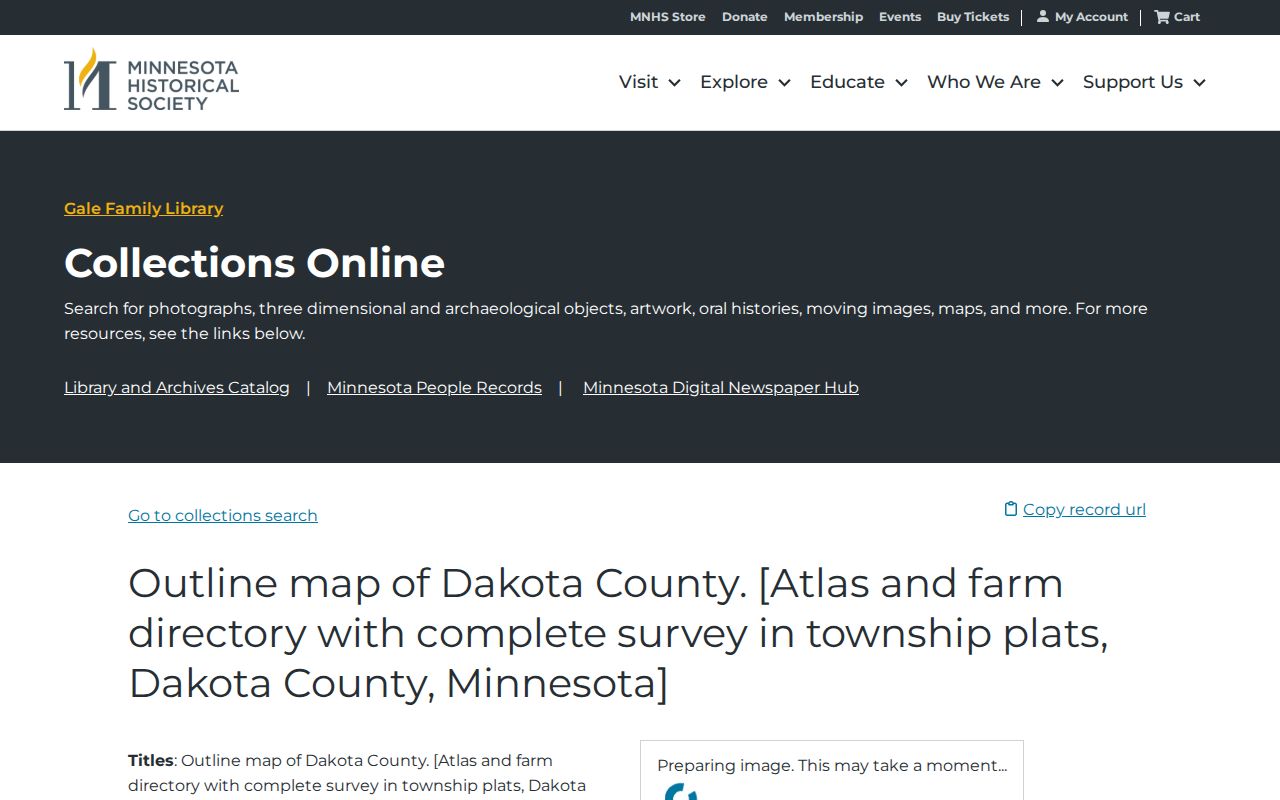
The digitized atlas gives Dakota County family-history research a dated land context before a modern mailing address or municipal boundary can be assumed.
Pair a plat owner with a township, legal description, and later parcel information. Keep the historical township label intact. That practice helps when a current postal city does not match the place name used in an older source.
Dakota County Library Research
Dakota County Library supplies the practical research layer around a historical directory. Its database listing includes Ancestry Library Edition, which is available in the library, and HeritageQuest, which the research identifies as library-card access. HeritageQuest includes federal census material, local histories, digitized books, vital-record leads, and historical documents. The same listing includes America’s News, the Historical Minneapolis Tribune, and Minnesota News Sources. Newspaper dates are database coverage, not proof of a Dakota County directory entry.
Wescott Library is at 1340 Wescott Road in Eagan. Its phone is 651-450-2900 and its research email is askalibrarian@co.dakota.mn.us. Ask for local newspapers, directory material, obituaries, or historical-address help rather than assuming a database gives unrestricted remote access. The Historical Minneapolis Tribune offers full pages for 1909-1922 and indexed or abstracted material for 1867-1908.
Review the Dakota County Library research-database listing before choosing an access route.
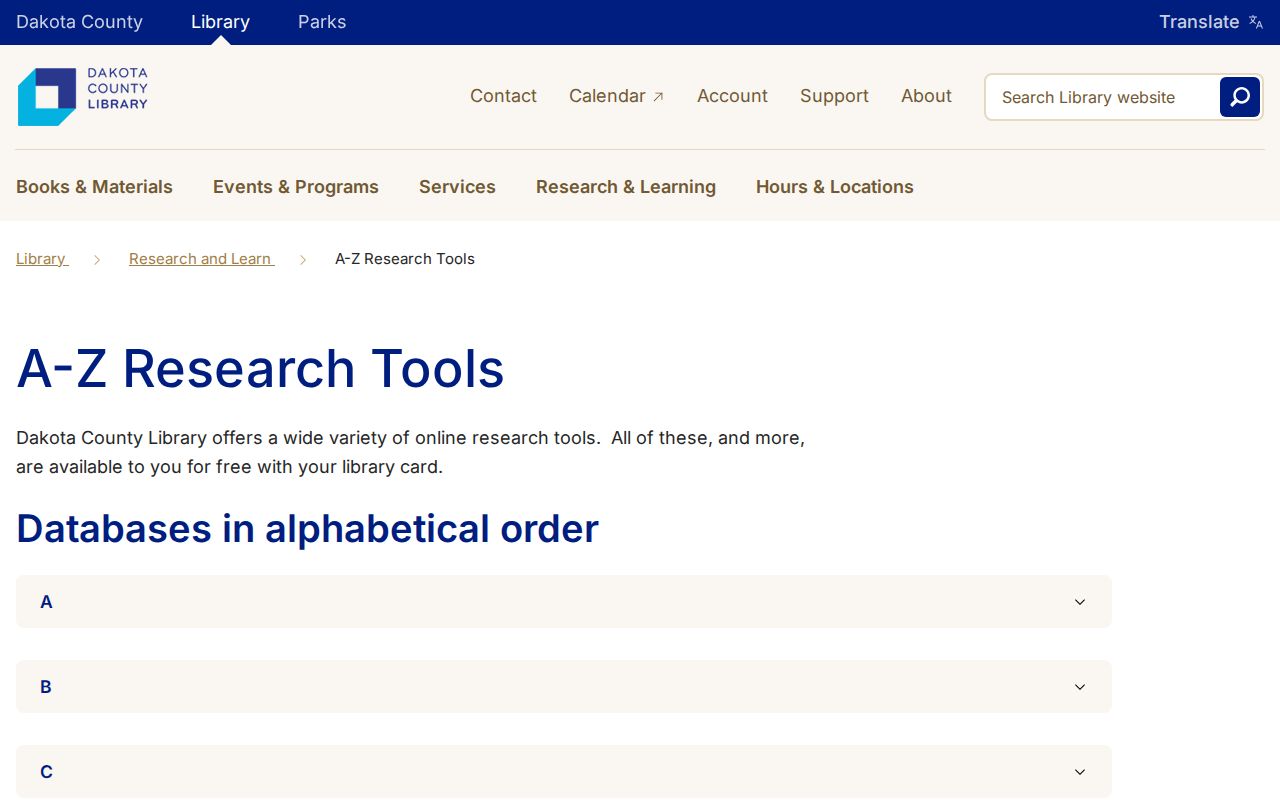
The library listing is useful for deciding whether a Dakota County historical-directory lead needs an in-library visit, a library card, or a request to staff.
Reading Dakota County Directory Entries
Read a Dakota County directory entry as a dated transcription, not as a complete profile. Preserve the page image and edition first. Then record only fields actually printed in that entry. A name line can include a spouse or relationship, occupation or employer, street number, telephone, and an owner, renter, or widow notation. Those details are valuable leads, but their appearance varies by volume. No unrestricted local entry page or abbreviation key was inspected during the research, so a mark should never be expanded from memory.
| Name display | Copy the spelling, initials, suffix, and relationship notation exactly as printed. |
|---|---|
| Address line | Record the number, street, town, and nearby entries when they appear. |
| Occupation or employer | Preserve it as a historical affiliation, not as a current status. |
| Telephone or business detail | Note it only when the edition prints it and keep the edition year beside it. |
| Owner, renter, or widow mark | Transcribe the symbol and consult that volume's key before expanding it. |
- Criss-cross directory
- An address-ordered portion of a directory that can lead from a street number to a listed household or business. Exact Dakota County runs must be confirmed item by item.
- Householder index
- A list organized around a household or address. Whether one is present depends on the particular directory.
- Abbreviation key
- The publisher's explanation of its own marks and shortened terms. Photograph or copy it from the same edition before interpreting a symbol.
Trace Dakota County City Directories
A household trail is stronger when it moves through adjacent years and then crosses into a second record family. Start with one known address or name, read nearby entries, and compare the surname in the next available directory year. Track changes in address, spouse or child notation, occupation, employer, and telephone number as separate observations. A move is a research event, not a conclusion about why the household moved.
- Locate the earliest available Dakota County directory entry for the name, town, or address and save the edition and page.
- Read the entry and its neighboring lines, then search the next available year instead of filling a missing year by guesswork.
- Record each change in spelling, relationship, address, occupation, employer, or telephone field.
- Pair the directory period with federal census years or the MNHS state-census material, whose coverage reaches 1849-1905.
- Use a deed, permit, newspaper notice, obituary, probate file, cemetery record, or church record to corroborate a major change.
A person who disappears may have moved, died, changed a listing, or simply not been covered by that issue. DCHS and MNHS archival sources can supply useful follow-up, but the evidence should retain its original source and date.
Dakota County Archive Partners
The Dakota County Historical Society is a local fallback when a directory search stops. Its research description includes church, cemetery, and census records; obituaries; marriage announcements; Catholic Church records; clippings; photographs; and microfilm newspapers. It lists genealogical help at $15 per half hour. The Lawshe Memorial Museum in South St. Paul is the related contact for city, township, land, family, and community history. An official DCHS newsletter also reports local directories and 1920s Hastings Sanborn maps in the research setting, although exact edition availability needs a direct request.
MNHS provides a separate research-service route for city directory and telephone book requests, court files, 1918 alien-registration research, selected historical vital research, and military records. MNHS says it cannot certify records. Use that route for a targeted request with the town, year, spelling variants, and any shelf information from the telephone-directory finding aid.
Start with the DCHS records-search resources or the MNHS research-services page when a Dakota County directory needs archival follow-up.
Dakota County Directory Timeline
Place names and record locations change over time. Dakota County was founded in 1849. Its county seat was Kaposia in 1853, Mendota in 1854, and Hastings in 1857. Those moves matter when an older reference uses a former seat or jurisdiction rather than a present mailing city. The county’s river geography also shaped settlement and later municipal movement, so a family or business may appear under more than one local place name.
| 1849 | Dakota County was founded, with boundaries larger than the present county. |
|---|---|
| 1916 | The atlas and farm directory recorded rural owner names on township plats. |
| 1928 forward | The MNHS telephone-directory finding aid begins its item-level directory path. |
| 1920s | DCHS reports Hastings Sanborn maps in its local research environment; ask for a specific year. |
Historical MNHS material may use the spelling “Decota” and township or unorganized-territory labels. Preserve the displayed spelling, then test normalized variants. A modern address match is useful, but it should not silently replace an older place description.
Dakota County Archive Limits
Dakota County historical directories are leads, not a complete resident roster. A telephone book may omit an unlisted household. A directory can list a business or subscriber instead of every person at an address. Property records identify recorded parties and ownership relationships, while a directory or census may be more useful for a household question. Keep owner, tax-mailing recipient, grantor, grantee, applicant, contractor, and occupant as different roles.
For a current address-keyed record trail, use the Dakota County street directory alongside the historical material. For a historical directory search, retain the exact edition, page, city, source link, and access date. That documentation makes a later correction possible when a catalog entry, map, or spelling variant changes the result.