
Dakota County Previous Resident Sources
A Dakota County address trail has different sources for different eras. The county parcel card establishes the present parcel context. RecordEASE provides the online land-record route for recorded parties. Telephone directories, the 1916 atlas, census material, newspapers, and local archives supply historical household leads. None is a complete list of people who lived at an address. Use the source that matches the date, then preserve gaps instead of assuming an unlocated year looks like the year before it.
| Source | Years | Where Held | What It Shows |
|---|---|---|---|
| RecordEASE abstract computer index | Back to 07/08/1993 for computer-indexed abstract documents | Dakota County Property Taxation & Records | Recorded parties, instruments, legal descriptions, and recording details |
| MNHS telephone directories | 1928 forward; city and year vary | MNHS finding aid | Item-level city, year, shelf, and possible subscriber or address leads |
| Dakota County Atlas and Farm Directory | 1916 | MNHS digital collection | Township-plat owner names and rural land context |
| MNHS People Records | State census 1849-1905; collection coverage varies | MNHS People Records search | Historical person and census leads, with collection-specific fields |
| DCHS archives and newspapers | Exact span varies | Dakota County Historical Society | Church, cemetery, census, obituary, clipping, photo, and newspaper leads |
Begin with the parcel and date when the address is known. Begin with a city and a year when the historical street number is uncertain. A rural farm lead may require the 1916 atlas before a modern street-address search can succeed.
Dakota County Address Records Start
For a Dakota County house history, normalize the address first. The county property search accepts a full or partial address and a Parcel ID, also called a PID, with or without dashes. The result card can show the owner, owner mailing address, municipality, tax description, school and watershed districts, tax and building panels, printable property details, and subdivision-plat links. Save the situs address, parcel ID, municipality, tax description, and date checked before moving to the deed route.
The county owner card is not an occupant list. A tax mailing address may simply show where correspondence goes, and a property can be owned by an entity. The situs address identifies the physical parcel. Those distinctions keep each owner, recorded party, and occupant role from being blended into one unsupported claim.
Use the Dakota County Property Information Search for the address or PID starting point, then use the map and municipality as a cross-check when several matches appear.
Dakota County Deed Records Chain
The Dakota County deed chain follows recorded transfers, not household membership. Find the current owner on the property card, then locate that owner as the grantee on the purchase deed. The seller on that instrument is the grantor. Search the seller as a grantee to identify the earlier purchase, and repeat. At every step, compare the legal description, lot and block or plat, and document number. A name-only match is too weak when several people share a name.
See the Dakota County recording information before choosing the grantor and grantee route.
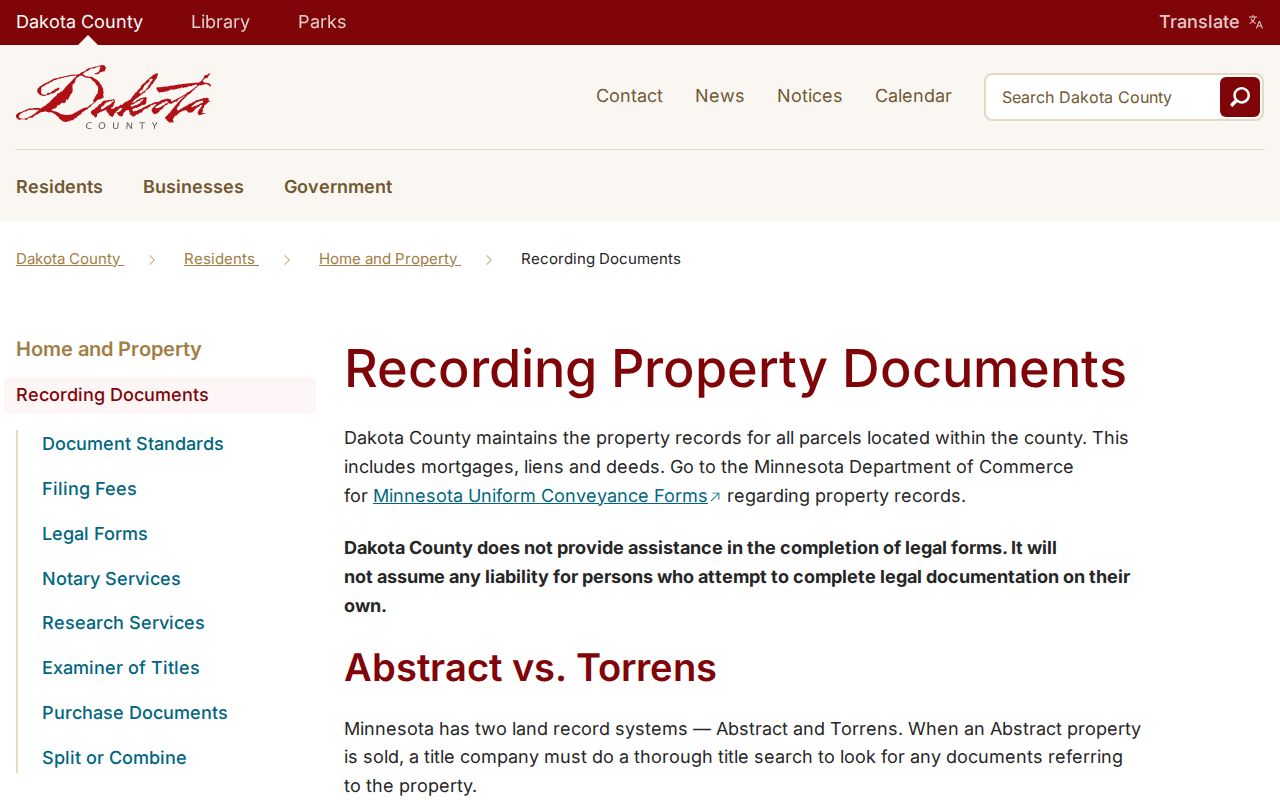
The county recording route helps connect a Dakota County previous-resident search to the correct instrument and legal-description trail rather than an assumed address history.
- Capture the parcel ID, situs address, current owner, and Abstract or Torrens indicator from the Dakota County property record.
- Search RecordEASE for the current owner as a grantee and identify the purchase deed or other transfer instrument.
- Record the grantor, grantee, document number, dates, and legal description from the instrument.
- Search the former grantor as a grantee, compare the legal description again, and repeat the sequence backward.
- When the online record is missing or earlier than its index range, request targeted assistance with the party names, approximate date, document type, and parcel details.
- Grantor and grantee
- The grantor transfers an interest in the recorded instrument. The grantee receives that interest. Their roles apply to that document, not to every person who lived at the property.
- Chain of title
- The sequence of recorded transfers and related instruments tied to the same land interest over time.
- Legal description
- The land description used in the recorded instrument. It is more stable than a street address when roads, numbers, or postal labels change.
Dakota County RecordEASE Cutoff
RecordEASE is Dakota County’s online land-record system. The county reports that computer-indexed abstract documents reach back to 07/08/1993. The landing route requires an account. Occasional users create a credit-card account, while subscribers pay a monthly fee. The county’s schedule includes occasional session, search, document, and certificate charges, along with subscription charges. Verify the displayed fee before paying because fee schedules can change.
For a document that is not located online, do not conclude that it never existed. Dakota County identifies earlier research routes through county staff, books or microfilm, DCHS, MNHS, or a title professional. Recorded-document copies can also be requested through the Hastings Administration Center, Northern Service Center in West St. Paul, Western Service Center in Apple Valley, or a written research request to Property Taxation & Records in Hastings. The county asks requesters to call for the cost and allows about 24 hours for the stated copy route.
Note: RecordEASE status notices use separate processing queues, so a recently recorded Dakota County instrument may not appear immediately.
Dakota County Title Records
Dakota County uses two title systems, Abstract and Torrens. Most county property is Abstract. The county property map layer can identify the parcel type. For Abstract land, follow the recorded-instrument chain and legal description. For Torrens land, the Certificate of Title and its memorials are central, and the Examiner of Titles may be part of the controlling research route.
These systems are not interchangeable. A complicated Torrens event may involve a trust, probate, a guardian or conservator, a divorce decree, a power of attorney, bankruptcy, a transfer-on-death deed, or a common-interest community. The county says no turnaround is guaranteed for examiner work. Treat a certificate or examiner question as title research, not as an inference about who occupied the Dakota County address.
Consult the Dakota County Examiner of Titles information when the map identifies Torrens property.
Dakota County House Records
MNHS provides a focused fallback when a Dakota County address search reaches the historical layer. Its research services include City Directory and Telephone Book Search Requests, court-file research, 1918 alien-registration research, pre-1900 birth and pre-1904 death research, and military-record research. A request should state the address or town, approximate year, known spelling variants, and the exact question. MNHS notes that it cannot certify records, so a returned result is research support rather than a certified record.
Open the MNHS research-services route to review the available request options.
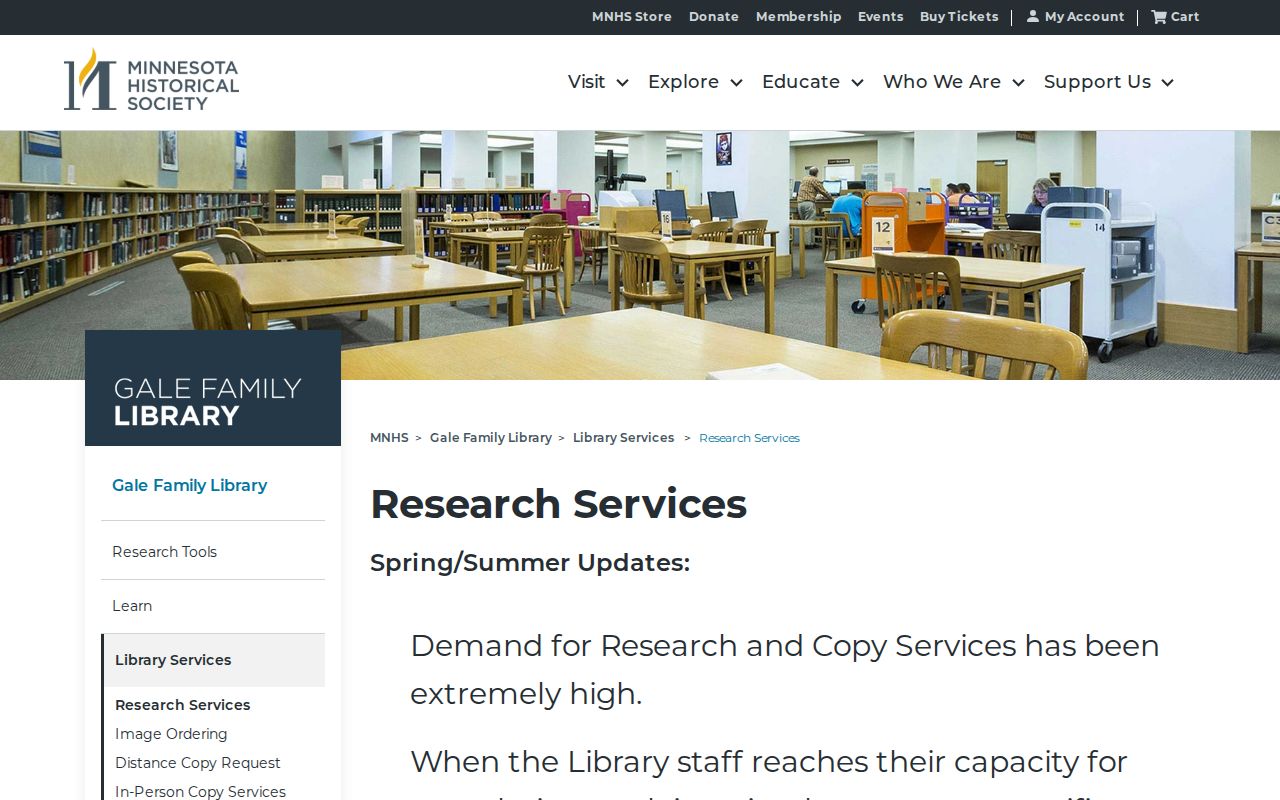
The MNHS service is especially useful when a Dakota County address has a known historical period but the exact directory volume or archival file is not yet identified.
Dakota County Household Records
Recorded owners are only one layer of a Dakota County address history. To identify historical household entries, pair the recorded chain with address-ordered directory material and census records. The MNHS telephone-directory finding aid begins in 1928, but exact local city and year coverage must be checked item by item. For earlier rural research, the 1916 atlas provides owner names on township plats. The historical collections themselves are described on the Dakota County city directory page.
- Match the deed period to every available telephone or address-directory item around the target date.
- Record the exact listed name, street number, town, telephone or business field, and edition page without expanding unexplained abbreviations.
- Compare the next available directory year and mark a changed address, relationship notation, occupation, or listing as a lead.
- Pair the time period with federal census material or the MNHS state census, which reaches 1849-1905.
- Use an obituary, probate file, cemetery record, newspaper item, permit, or deed to test a major transition.
A directory entry may name a subscriber, a business, or a household contact. It does not establish that every person at the property was listed or that the person remained there for the full year.
Dakota County Historical Records
DCHS is the local archival route for Dakota County house and family history. Its records-search description includes more than half a million church, cemetery, and census records, plus obituaries, marriage announcements, Catholic Church records, clippings, photographs, and microfilm newspapers. It lists genealogy help at $15 per half hour. An official newsletter reports city directories, county newspapers on microfilm, city and township clipping and photo files, and Hastings Sanborn fire-insurance maps from the 1920s in the local research environment. Ask staff for a specific year because a complete catalog span was not verified.
The MNHS People Records search supplies another historical layer.
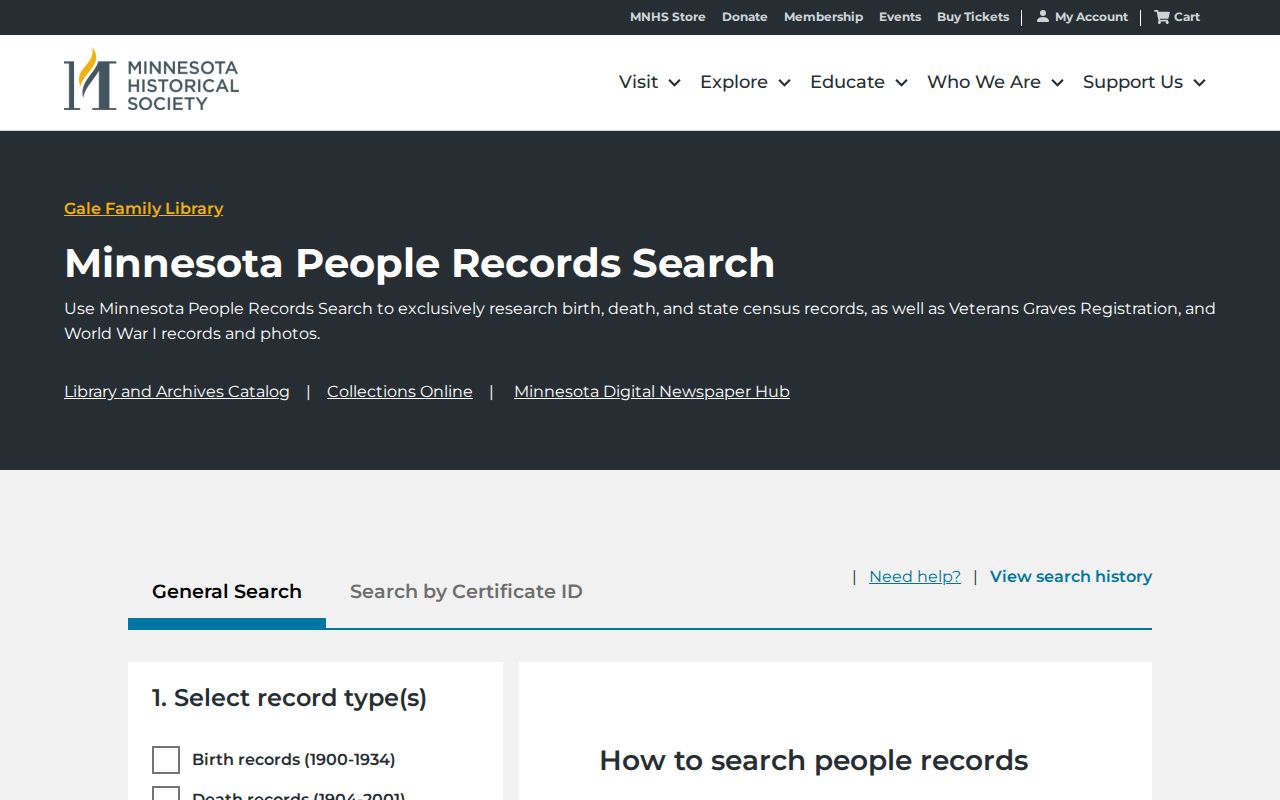
MNHS People Records can add state-census, birth, death, veteran, or Gold Star leads, but its collection-specific fields and coverage should be read before connecting a result to the Dakota County address.
Dakota County Address Records
Historical address work in Dakota County requires local time and place labels. The county was founded in 1849. Its county seat moved from Kaposia in 1853 to Mendota in 1854 and then Hastings in 1857. The original county boundaries were larger than they are now. A search can therefore need a former county-seat label, township, or neighboring jurisdiction before a modern municipality becomes useful.
| 1849 | Dakota County was founded, with historical boundaries larger than today’s county. |
|---|---|
| 1916 | The digitized atlas and farm directory preserved rural owner names on township plats. |
| 1928 forward | MNHS telephone-directory item records provide a city and year path, with each run to be checked. |
| Historical spelling | MNHS material can use “Decota” and township or unorganized-territory context. |
Store the street number, directional, unit, municipality, postal city, ZIP, parcel ID, and date as separate fields. For older records, keep rural route, township, or former street spelling in an alias field. That record of the search term matters when an older address does not map cleanly to a current Dakota County parcel.
Dakota County Address Record Boundaries
A Dakota County deed shows recorded parties and a legal interest. It does not prove that the grantee, grantor, tax-mailing recipient, mortgagee, lien claimant, contractor, or permit applicant lived at the address. An address directory, census, or historical source can add an occupant lead, but each has its own coverage limits. Utility customer data is not public, and protected or withheld addresses can be absent or different in public sources.
Use the results for lawful personal house history, family history, estate research, or civic curiosity. Preserve the source relationship and date, and do not use an address trail to stalk, harass, or harm a living person.